

Smart Agrivoltaic Management System
SAMS
In Korea, an agrivoltaic licence of up to 23 years depends on proving that farming continues. SAMS is the operating platform that produces that proof.
Once the crop has the light it needs, the panels follow the sun and generate.
Shades the midday peak to lower leaf temperature and light stress.
Sheds rain toward the furrows, limiting crop damage and soil loss.
Lies flat so the wind passes over and the structure carries less load.
A steep tilt sheds snow before it builds up over the crop.
Closes flat at night to soften radiative cooling and frost damage.
More shade cuts evapotranspiration and holds soil moisture.
Angles are illustrative; on site SAMS sets them from the crop, the structure and local weather.
Beyond generation, SAMS turns the panels for rain, wind, snow, frost, strong sun and drought to protect the crop. It runs at the Bogor and Jamaica dynamic pilots.
Data flow
From field data to panel angle and report
Data from sensors, inverters and the PLC gathers in SAMS, passes through the crop-growth models and returns as control commands and reports.
In the field
- Weather station irradiance · temperature · humidity · wind
- Soil moisture sensors per crop plot
- Inverters generation
- PLC drive angles
↓ SAMS
- LightGBM ensemble → Transformer plant traits and biomass prediction · 3 patents
↓ Outputs
- Panel-angle control dynamic structures, via PLC
- Farming-verification report farming evidence for extension reviews
- Settlement report generation · farming
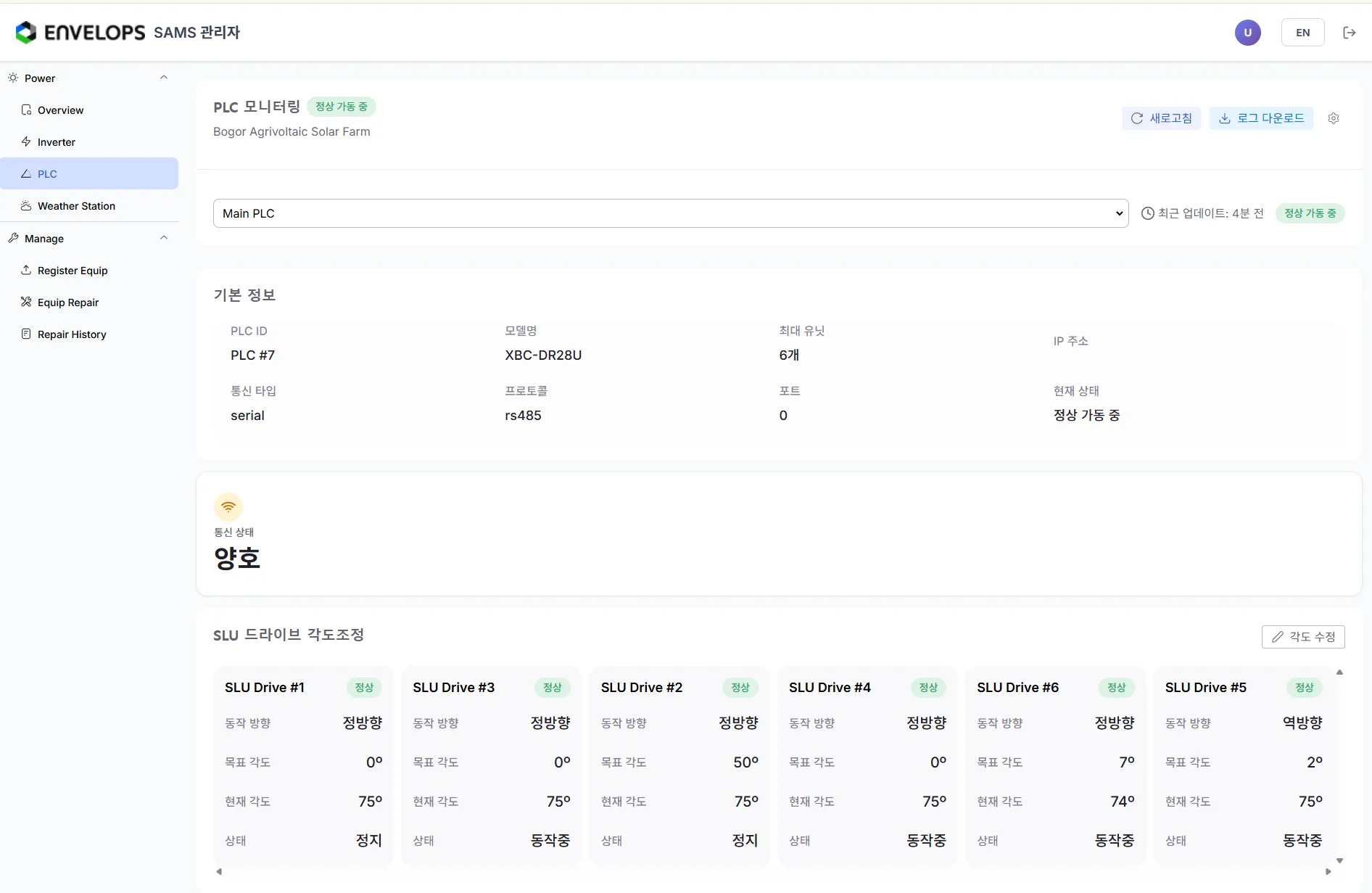
The operating screen
The screen as it is used on site.
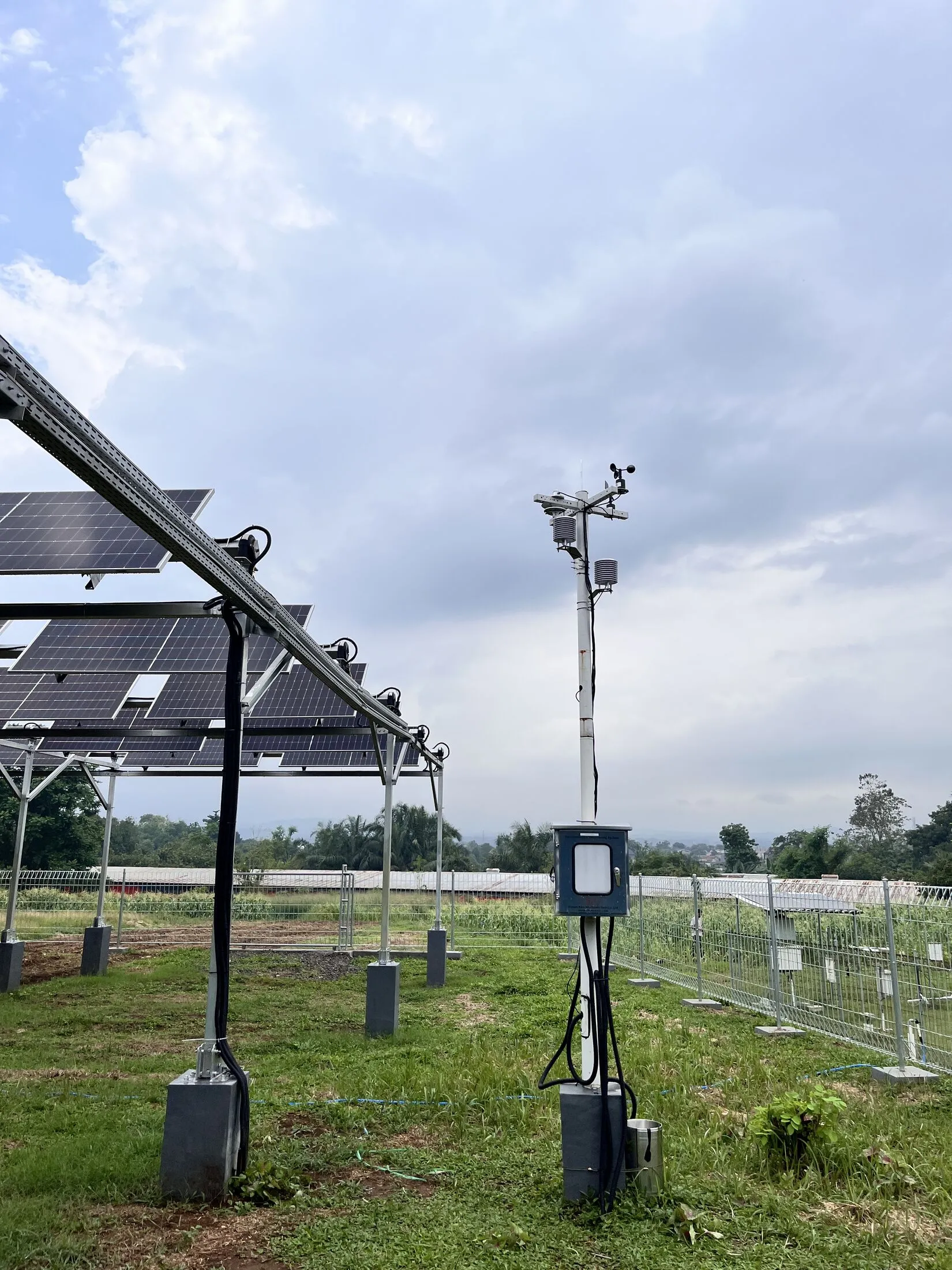
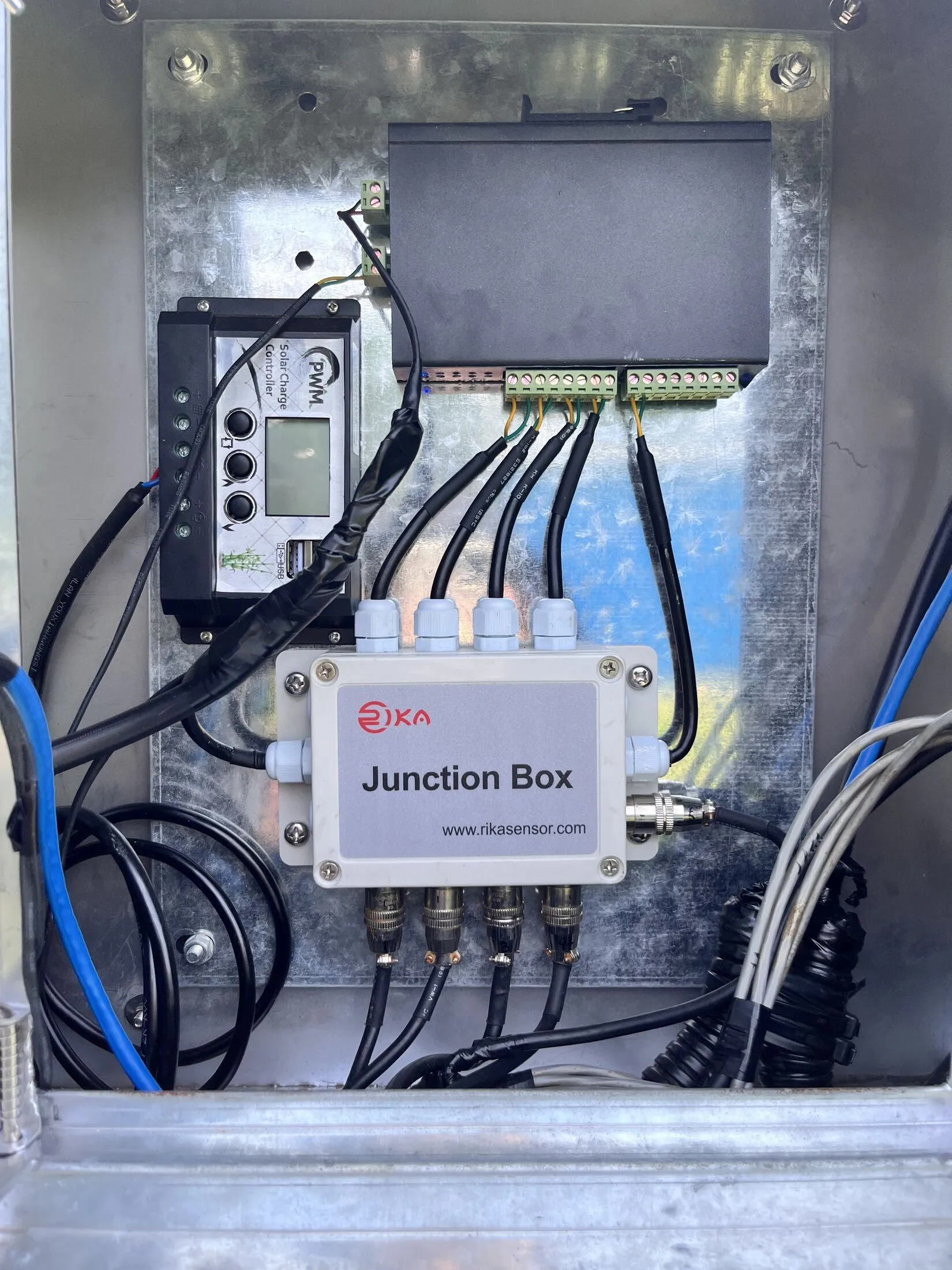
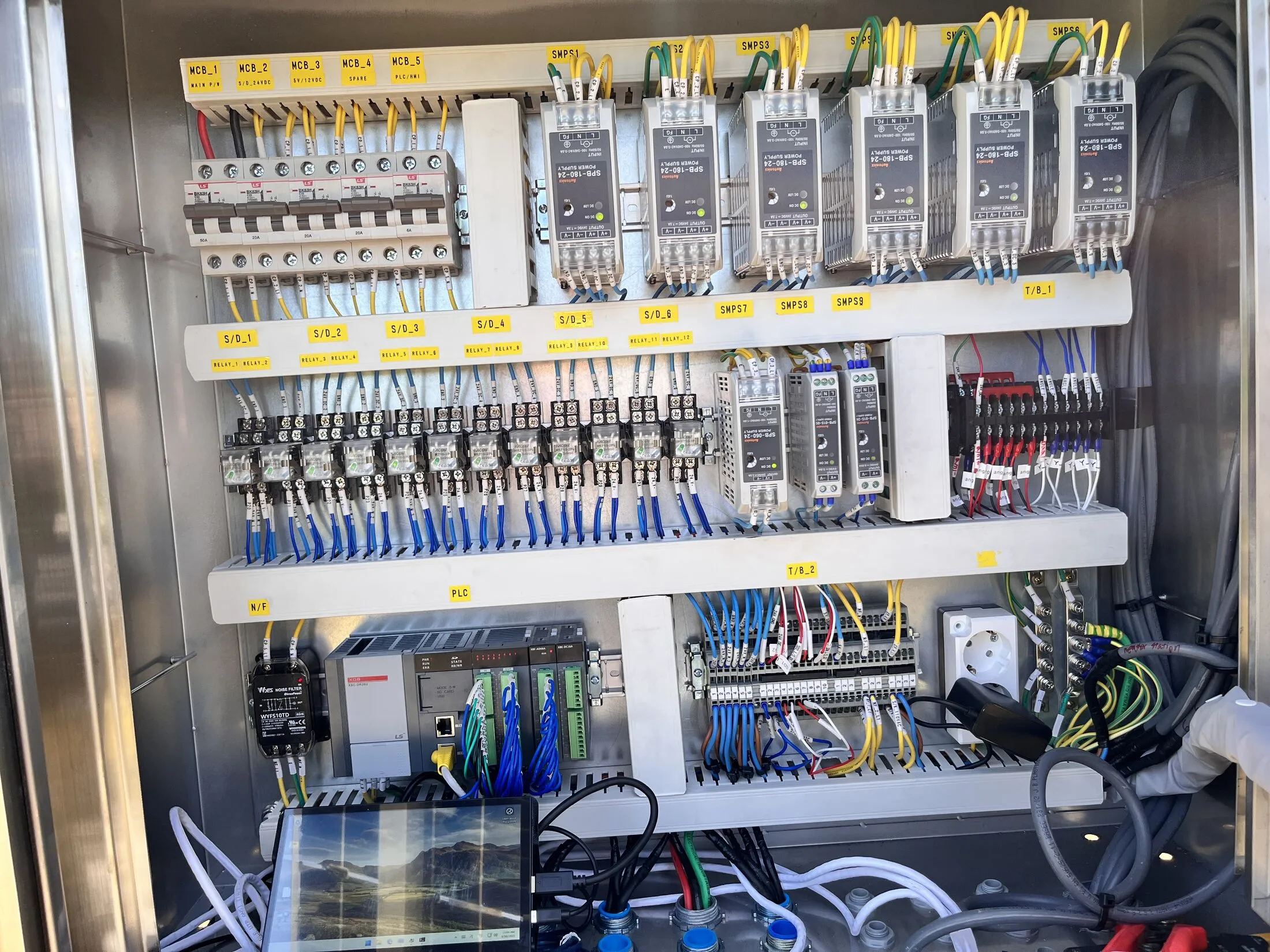
Field hardware
From sensors to the control cabinet, installed by us.
Evidence
What the measurements and patents show.
-
2026.01
Bogor (Indonesia) agrivoltaics research published in Agronomy (2026, 16(1):116): under about 35% less incident radiation, soybean yield rose 106% in the wet season and 17% in the dry season
Source · Agronomy (DOI)
-
2026.04.10
Korean patent 10-2953004, AI-based apparatus and method for optimising agrivoltaic panel angles
Source · Ministry of Intellectual Property patent certificate
-
2025.12.11
Korean patent 10-2900687, AI-based apparatus and method for analysing crop growth and biomass
Source · Ministry of Intellectual Property patent certificate
-
2024.01.05
Korean patent 10-2623428, modelling system for predicting generation and crop yield in agrivoltaics (filed July 2021)
Source · KIPO patent certificate
-
2025.09.03
CTCN ASIA25 session presentation: "Smart Agrivoltaic Management System (SAMS)"
Source · CTCN (presentation PDF)
-
Project term up to 23 years (previously 8 years of temporary farmland use): an initial 5-year permit, extended in 3-year steps, with farming reviewed at each extension
Source · Korea Agricultural and Fisheries News · Energy Daily (reports on the draft decree, Sept 2026)
Further measured figures (temperature buffering and others) are published once sources and conditions are confirmed; none are shown before then.