

Solutions
Develop, design & build, operate.
We turn plants that keep farmland in use into projects that finance can back. Feasibility and funding, crop-specific design and construction, data-driven operation: one team to the end, with deliverables that institutions and investors can take straight into appraisal.
Develop
Feasibility · Finance · Safeguards
We prepare projects to pass lender and institutional review, using a stage-gate process with explicit deliverables and go/no-go criteria at each step.
Deliverables: feasibility report, financial model, risk register, concept note
Ovalau, Fiji 4 MW in development (GCF-approved 2020, 25-year PPA 2023, 200 kW pilot built 2023) · GGGI Rwanda preliminary study and roadmap (2024) · GGGI Ethiopia feasibility study (2025) · Uzbekistan ODA pre-feasibility (2026)
- Pre-feasibility and full feasibility (technical, financial, social, environmental)
- Site, solar resource and crop suitability analysis
- Project-finance model with sensitivity and scenario analysis
- Environmental and social safeguards, risk allocation
- Concept notes for development finance institutions and climate funds
Stage-gate: the Ovalau, Fiji case
Each stage ends with deliverables and a go/no-go decision. Below is the actual path of the Fiji project, from identification to the main plant now in development.
-
Identification
KOICA project identification (2018)
Deliverable: concept note
-
Pre-feasibility
KEITI pre-feasibility study (2019)
Deliverables: feasibility report, financial model
-
Proposal and approval
Green Climate Fund proposal with KOICA support, approved by the GCF Board (2020)
Deliverables: funding proposal, safeguards documents
-
Pilot
200 kW pilot plant built under a Korea Energy Agency programme (2023)
Deliverables: pilot design, crop data
-
PPA and financing
25-year power purchase agreement with Energy Fiji Limited (2023)
Deliverables: PPA, financing structure
-
Main project
4 MW agrivoltaic plant in development
Deliverables: detailed design, construction, SAMS operation
Design & Build
Crop-specific shading · APV structures · standardised construction
Purpose-built agrivoltaic structures and crop-specific shading design produce a plant that keeps farming viable. Machinery paths, work safety and grid connection are handled at the design stage.
Deliverables: concept, basic and detailed drawings, structural and electrical calculations, construction specifications
21 sites in Korea · Bogor (soybean, shallot) · Da Lat (artichoke) · Jamaica (50 kWp) · Fiji pilot (200 kW) · Chiang Mai (29.2 kWp, under construction)
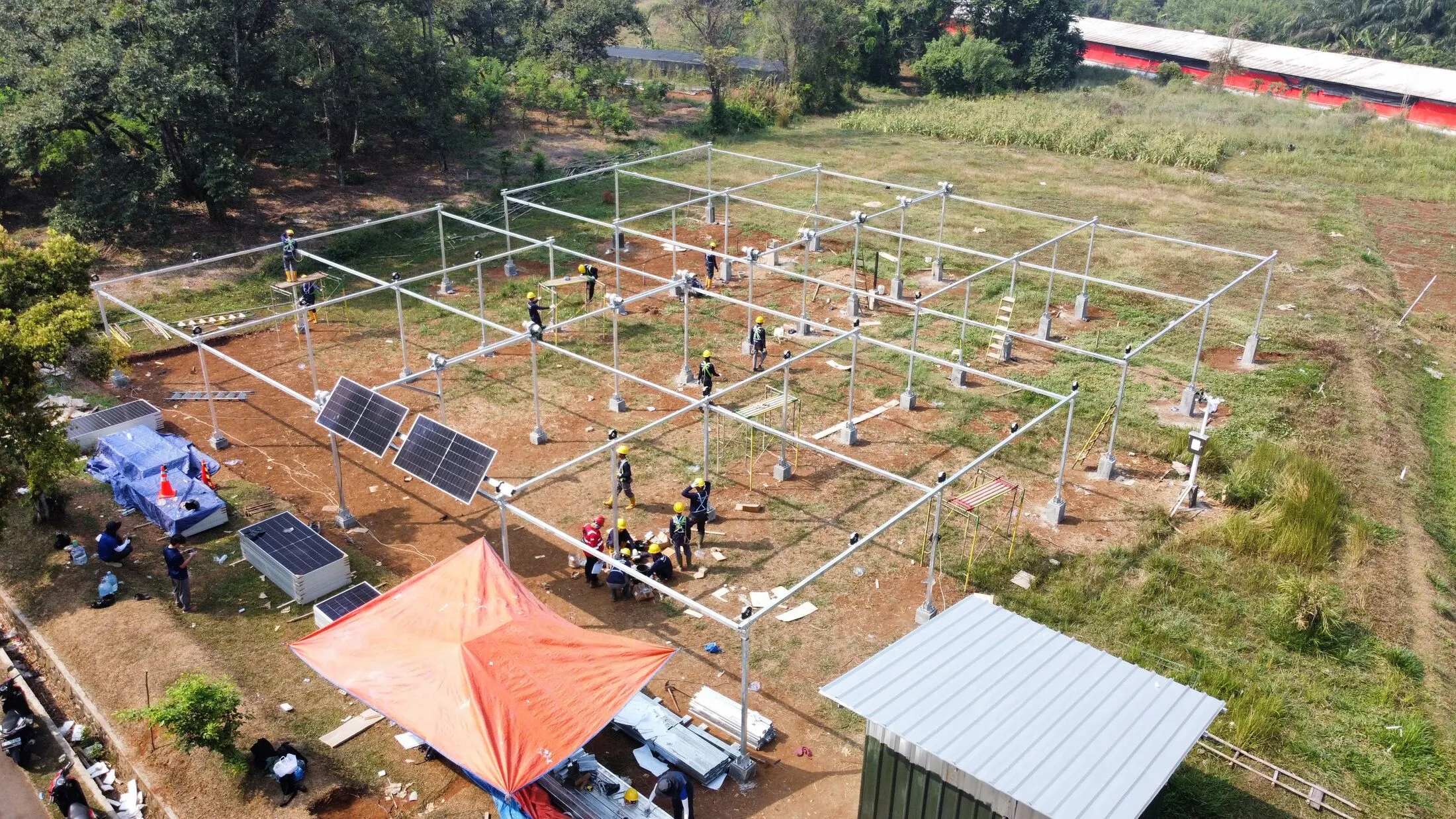
- Shading rate, panel layout, clearance and post spacing per crop
- Structural safety (wind, snow) and shading simulation
- Electrical and grid-connection review, permitting support
- Standardised agrivoltaic construction and site supervision
- Dynamic (tracking) structures, applied at the Bogor and Jamaica pilots
Operate
SAMS data-driven operation · farming verification · farm management
We operate the plant and the farm together. SAMS gathers generation, crop and microclimate data and produces the farming-verification and settlement reports required throughout the project term.
Deliverables: monthly operation report, farming-verification report, settlement report
2 Agronomy 2026 papers · 3 registered patents · CTCN ASIA25 SAMS presentation
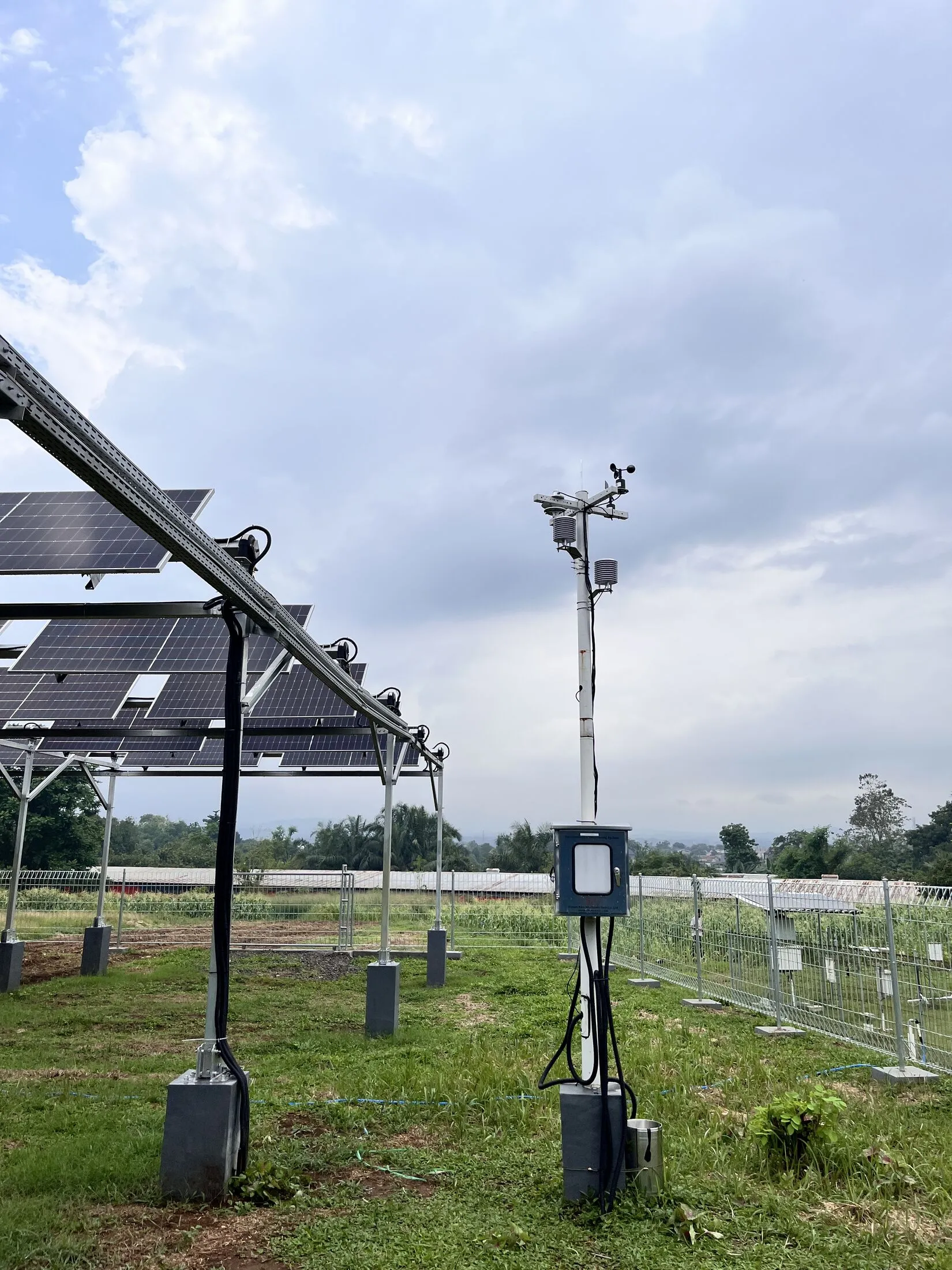
- SAMS monitoring: irradiance, temperature, humidity, wind, soil moisture, generation
- Balance of shading and generation, driven by crop-growth models
- Farming-verification and settlement reports for authorities and lenders
- Farm management on your behalf, seeding to harvest (optional)
- O&M, scheduled inspection, anomaly alerts
Nexus
One plant that runs the whole farm.
Electricity from an agrivoltaic plant feeds the smart farm, irrigation, cold storage, processing and transport: a farm microgrid that runs where the grid does not reach. It is the core business model of ENVELOPS.
-
High-value farming, self-contained
Smart farm, cold storage and processing on site lift the value of the crop where it grows. What used to be lost after harvest becomes income.
-
Carbon-free production
Growing, storing, processing and transport all run on the renewable energy of one site. Carbon-free produce becomes a new kind of value.
-
With or without the grid
With storage, the microgrid runs where no transmission line reaches. A PPA or a grid connection is a choice the site makes, not a requirement.
-
Infrastructure with owners
Revenue from power and produce goes to residents and operators, so maintenance continues. It answers the oldest problem of infrastructure in remote regions of developing countries: who maintains it.
Inputs
Sunlight
one site, light used twice
Farmland
farming continues
Water
shade cuts evaporation
Agrivoltaics + storage
a microgrid that runs without the grid
PPA or grid connection, as the site needs
SAMS runs generation and farming together
What the electricity runs
Smart farm, hydroponics
high-value crops on less water
Smart irrigation
pumps and supply, automated
Cold storage
cuts post-harvest loss
Processing
value added on site
EV charging
transport on renewables
Connectivity and data
sensors, control, training
- High-value produce
- Carbon-free production
- Local income and jobs
- Maintenance that continues
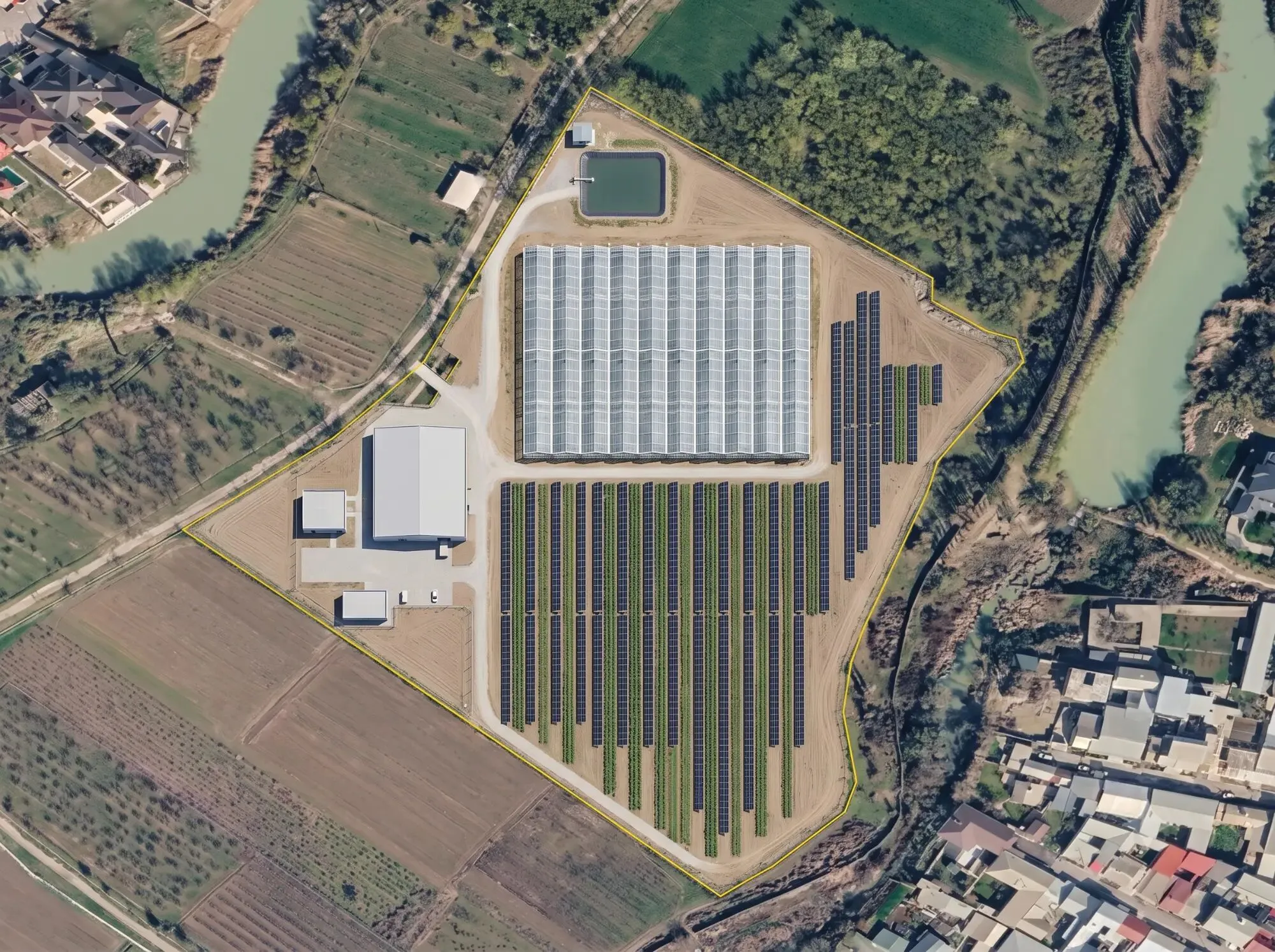
- 1
Smart agrivoltaics
panel rows over cotton, angles set by SAMS
- 2
Smart-farm greenhouses
hydroponics on less water
- 3
Reservoir and smart irrigation
pumps and supply, automated
- 4
Cold storage and processing
less post-harvest loss, value added
- 5
Storage and control room
a microgrid with or without the grid
- 6
EV charging
transport on renewables
Korea
Solar Income Villages.
In Korea, ENVELOPS supports municipalities and resident cooperatives under the government's Solar Income Village (햇빛소득마을) programme: agrivoltaic-specific design, crop planning and SAMS data-driven operation for the farming verification the new Agrivoltaics Act requires. Programme page (in Korean). For factory and office roofs we design rooftop-garden agrivoltaics: panels for the building's own use with a staff garden beneath. Rooftop page (in Korean).
Other services
Energy and environment development services
Engagements outside agrivoltaics.
Biomass and waste-to-energy
- Development of a multi-MWe overseas biomass power demonstration project · Jangwoo Machinery (2018)
- Pre-feasibility market study for torrefaction-based waste-to-energy in Indonesia · Green Technology Center (2019)
- Development services for the 2.5 MWe Rambutan EFB biomass power project, Indonesia (2020–2021)
Renewable-energy feasibility and development
- Feasibility study for the Bambang small-hydro plant, Sulawesi, Indonesia · Korea Energy Agency (2019–2020)
- Pre-feasibility study for 1 MWp agrivoltaics in Port Antonio, Jamaica · Korea Energy Agency (2023–2024)
- 1 MWp rooftop-solar ODA pre-feasibility study and local project development, Funafuti, Tuvalu (2023)
- Localisation of a map-based solar generation forecasting system in Fiji · Korea Meteorological Industry Promotion Agency (2019–2020)
Climate technology cooperation (UN CTCN technical assistance)
- Technical assistance for rainwater harvesting systems in Mozambique · KEITI (2021)
- Technical assistance for low-carbon transport technology in Cambodia · National Research Foundation of Korea (2019–2020)
- Technical assistance for public-transport system development in Ethiopia · National Research Foundation of Korea (2018–2019)
Energy policy consulting
- Master plan and capacity building for solar-powered electric two-wheelers in Indonesia · Korea Energy Agency energy policy consulting programme (2022–2025, four years)